Seasonal Financial Planning for the Household Year
Your household finances have seasons. Planning for them transforms predictable expenses from surprises into managed events.
The Household Financial Calendar
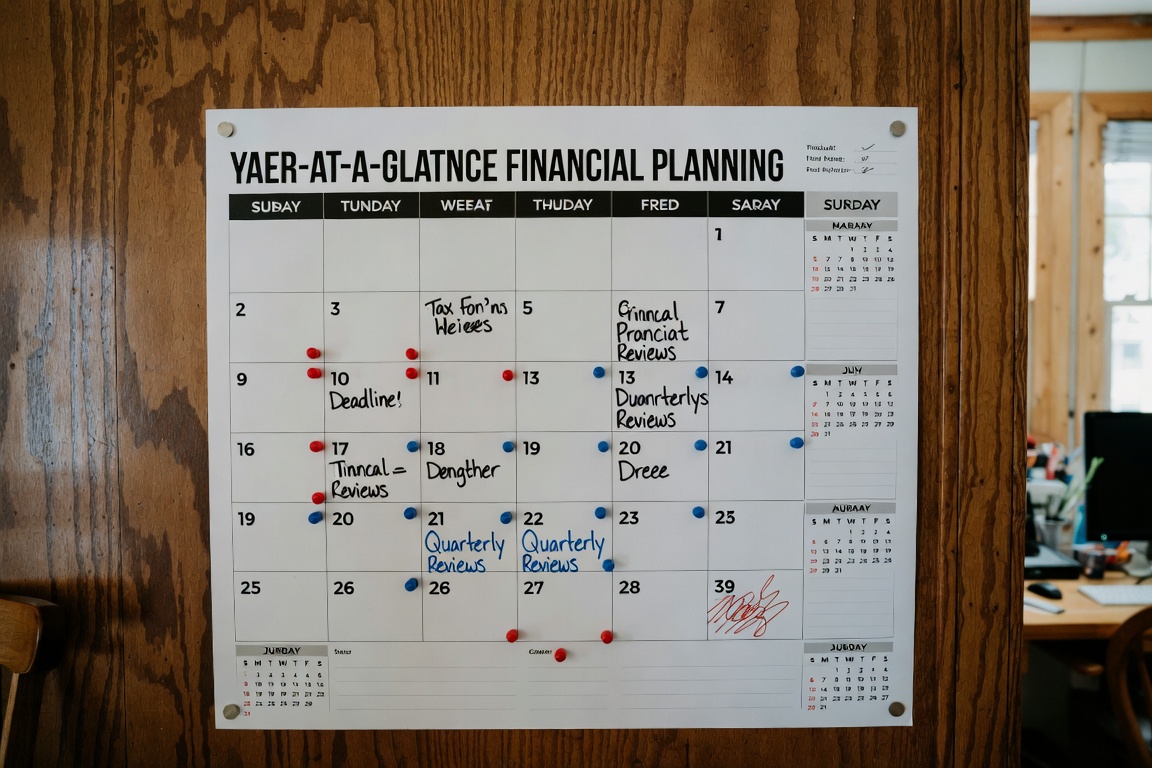
Every household’s financial year contains predictable peaks and valleys: months when expenses are higher, months when income changes are expected, and months when financial events require specific attention. A household financial calendar makes these patterns visible before they arrive, enabling planning rather than reactive management.
Q1 (January–March): Tax and Financial Review Season
The first quarter brings tax preparation, which provides an opportunity for a complete annual financial review. Review last year’s income and spending against the plan. Update the current year’s budget. Review insurance coverage and rates. Check beneficiary designations. Address any financial goals that were deferred. January is also typically lower in discretionary spending after the holidays — a natural time to reset and rebuild any savings consumed in December.
Q2 (April–June): Spring Planning Season
Spring brings warmer weather, increased activity, and historically increased spending on home, vehicle, and outdoor activities. Spring is also a natural time for major purchases — the temptation to spend on home improvement, landscaping, and recreational equipment peaks. Building spring spending into the household plan in advance — with specific budget allocations — prevents reactive overspending in a high-temptation season.
Q4 (October–December): Holiday and Year-End Season
The final quarter brings the highest-risk period for household budget discipline: holiday spending, seasonal social expectations, and year-end financial decisions all converge. A specific holiday budget — committed to in October before shopping begins — is the single most effective holiday financial management tool. Year-end charitable giving, tax-advantaged account contributions, and financial planning for the upcoming year all belong in the Q4 household financial calendar.
Disclosure: This site may receive compensation when you click on links or complete offers through our partners. Content is for informational purposes only and does not constitute financial advice.