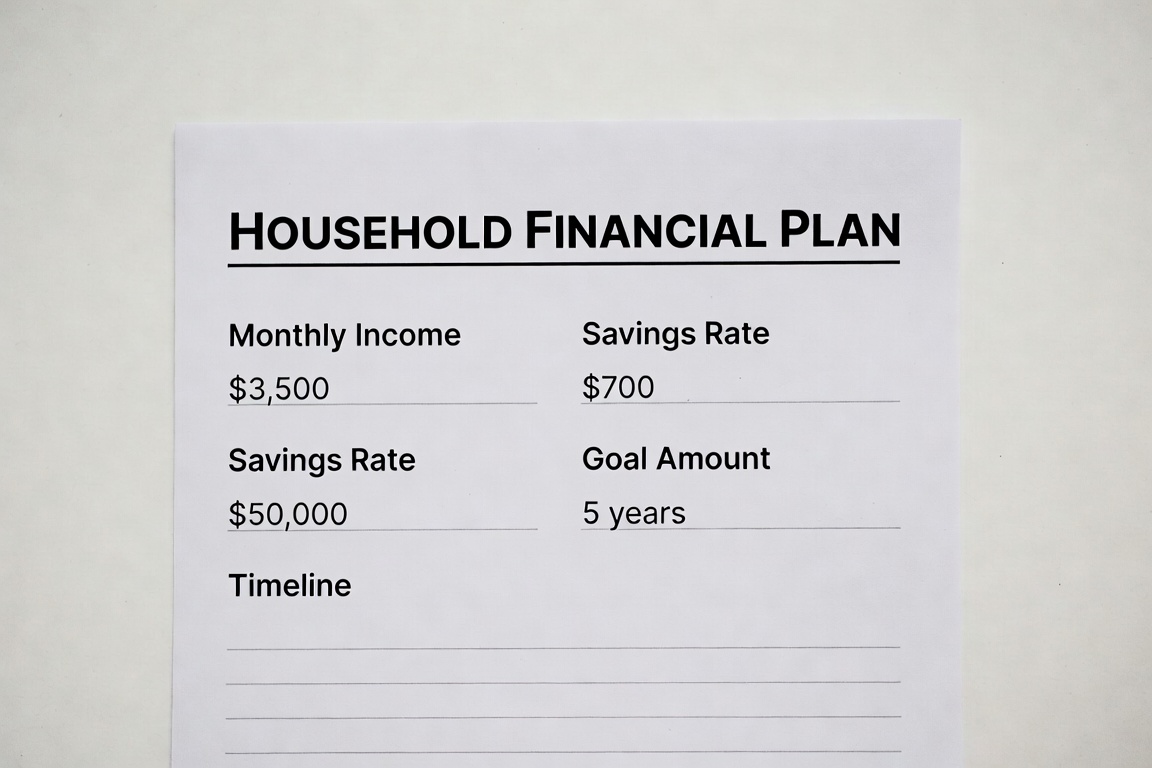
The One-Page Household Financial Plan
Your household financial plan does not need to be complicated. Here is how to put everything essential on one page.
Complexity Is Not the Goal
Financial planning has a complexity problem. The industry offers elaborate plans, complex tools, and sophisticated frameworks. This complexity can be valuable in specific situations — complex tax situations, large investment portfolios, estate planning needs. For most households, it is disproportionate to what is needed and actively discourages engagement: when the plan feels like too much to maintain, people stop maintaining it.
A one-page household financial plan contains everything most households need: where you are, where you are going, how you are getting there, and how you will know if you are on track. One page. Maintained regularly. Reviewed together. Infinitely more effective than a complex document that never gets opened.
The Four Sections
Section one: Current Position. Monthly income, monthly essential expenses, monthly discretionary expenses, current savings total, current debt total.
Section two: Our Goal. The household’s primary financial goal, stated specifically: amount, timeline, and why it matters to us.
Section three: The Plan. Monthly savings amount. Monthly extra debt payment. One specific behavior we are committing to maintain.
Section four: Check-In. Space for three numbers at the end of each month: actual savings that month, debt balance progress, and a one-word assessment (on track, adjusting, or off track).
Reviewing Together
A one-page household financial plan reviewed together monthly — a 15-20 minute shared review — transforms financial management from something one person does privately to a shared household practice. Both partners know the current position. Both know the goal. Both can see the progress. Shared visibility produces shared commitment in a way that solo management rarely does.
Disclosure: This site may receive compensation when you click on links or complete offers through our partners. Content is for informational purposes only and does not constitute financial advice.